
Wednesday, 16 July 2014
Pass your test!
Congratulations to Matthew Powders on passing his driving test first time in Milton keynes. All your hard work and determination to improve has paid off. Safe and happy driving.
www.travis-drive.co.uk

Monday, 7 July 2014
Tips for driving test nerves
Hints and Tips from other learner drivers to help banish those driving test nerves
Here are some hints and tips from other learner drivers about how they overcame driving test nerves:
Think of all the good times that you’re going to have when you pass your test.
Imagine that you’re a taxi driver and you’re taking someone home and have to follow their directions.
Chill out with friends before your test to help relax.
Chewing on chewing gum.
Bach’s rescue remedy.
Have a positive attitude – “I will try my best but if I fail then at least I’ve tried”
Don’t have a big meal before your test – it will make you feel sluggish and tired.
Hypnotherapy.
Ask your instructor to sit in on your test – a familiar face in the car can make you feel more at ease.
Nelson’s Back Rescue Remedy.
Don’t tell everybody when your test is!
Eat a bowl of porridge before your test.
Beta Blockers.
Listen to music before your test.
If you’ve found a great way to overcome driving test nerves, why not let us know.
Here are some hints and tips from other learner drivers about how they overcame driving test nerves:
Think of all the good times that you’re going to have when you pass your test.
Imagine that you’re a taxi driver and you’re taking someone home and have to follow their directions.
Chill out with friends before your test to help relax.
Chewing on chewing gum.
Bach’s rescue remedy.
Have a positive attitude – “I will try my best but if I fail then at least I’ve tried”
Don’t have a big meal before your test – it will make you feel sluggish and tired.
Hypnotherapy.
Ask your instructor to sit in on your test – a familiar face in the car can make you feel more at ease.
Nelson’s Back Rescue Remedy.
Don’t tell everybody when your test is!
Eat a bowl of porridge before your test.
Beta Blockers.
Listen to music before your test.
If you’ve found a great way to overcome driving test nerves, why not let us know.
Thursday, 3 July 2014
Driving test strike
Driving test candidates with tests on Thursday 10 July should still come for their test despite the threat of strike action by examiners.
Driving examiners who are members of the Public and Commercial Service union are planning to take strike action on Thursday 10 July 2014.
We're doing everything we can to make sure that tests go ahead as planned and urge all candidates to come for their test as usual.
Driving examiners who are members of the Public and Commercial Service union are planning to take strike action on Thursday 10 July 2014.
We're doing everything we can to make sure that tests go ahead as planned and urge all candidates to come for their test as usual.

Friday, 27 June 2014
A passed the driving test in Milton Keynes.
Another great driving test pass from Travis School of Motoring
Congratulations to Frank Njoro on passing his driving test with only 6 minors. Safe and happy driving around Milton Keynes.
 www.travis-drive.co.uk
Are you looking for quality driving lessons in the Milton Keynes area? Ask me what I can do to help you pass the driving test and become independent.
Congratulations to Frank Njoro on passing his driving test with only 6 minors. Safe and happy driving around Milton Keynes.
Are you looking for quality driving lessons in the Milton Keynes area? Ask me what I can do to help you pass the driving test and become independent.
Monday, 23 June 2014
Another first driving test pass in Milton keynes.

Pass your driving test in Milton Keynes
Another great first time pass in Milton Keynes from Travis School of Motoringwww.travis-drive.co.uk
A great standard of driving from Josh Bowker resulted in passing his driving test first time.
 Keep up the high standard of driving and be safe on them roads.
A great standard of driving from Josh Bowker resulted in passing his driving test first time.
The theory test cost are being reduced.
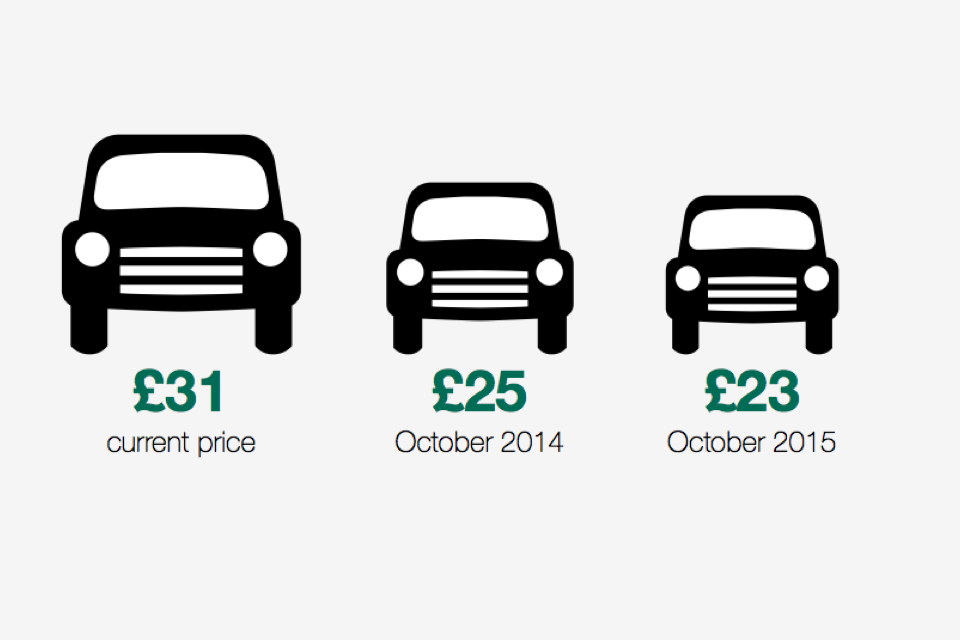
The cost of car and motorcycle theory tests will drop from £31 to £25 in October 2014, and then to £23 in October 2015.www.travis-drive.co.uk
The cost of the driving theory test will be cut by 25%, saving learner drivers in excess of £100 million over the next 9 years, Transport Minister Stephen Hammond announced today (23 June 2014).
The fee for a car driving theory test will fall by £6 in October 2014, taking the cost of a test from £31 to £25, with a further drop of £2 in October 2015.
Theory test fees for motorcycles and other categories of vehicle will also be reduced. The changes have been confirmed following a public consultation.
Keeping costs down for motorists
Transport Minister, Stephen Hammond, said:
We want to keep costs down for all motorists – that’s why we have frozen fuel duty – and by reducing the cost of the theory test we will save aspiring motorists around £9 million annually.This has been achieved without compromising on the vital role the theory test plays in making sure that new drivers know The Highway Code and the rules of the road. I am delighted that theory tests will now offer better value for money while continuing to meet these rigorous standards.
Driver and Vehicle Standards Agency Chief Executive, Alastair Peoples, said:
By agreeing new contract arrangements for the delivery of theory tests we have secured significant cost savings, and it is right that we pass these savings on to our customers. We want to make sure that we continue to keep pace with customers’ needs and deliver services in a way which is both convenient and cost effective.
Current and new theory test costs
| Type of test | Current cost | October 2014 cost | October 2015 cost |
|---|---|---|---|
| Car theory test | £31 | £25 | £23 |
| Abridged car theory test | £24 | £19 | £18 |
| Motorcycle theory test | £31 | £25 | £23 |
| Driver CPC module 1 (part 1): lorry and bus multiple-choice questions test) | £35 | £28 | £26 |
| Driver CPC module 1 (part 2): lorry and bus hazard perception test) | £15 | £12 | £11 |
| Driver CPC module 2 : case studies test | £30 | £24 | £23 |
| Approved driving instructor (ADI) part 1 test | £90 | £83 | £81 |
Wednesday, 4 June 2014
A great week of driving test passes.
Over the last week I have had two test passes. First one was a first time pass(well done Jasmine), the second one was a second time pass(well done Frank). Safe driving to both of you.
I have put the pass photos on my website for everyone to view.
www.travis-drive.co.uk
I have put the pass photos on my website for everyone to view.
www.travis-drive.co.uk
Tuesday, 3 June 2014

Monday, 2 June 2014
Standards Check Test. Your feedback
I am looking for some feedback from ADI's who have done the new standards check since April.
If you have had yours' could you leave some positive feedback.
Thank you
James
If you have had yours' could you leave some positive feedback.
Thank you
James
Top 10 reasons to fail the driving test.
Ten reasons for failing your driving test
1. Not acting correctly at road
junctions
Its
essential that you use the Mirrors, Signal, Position, Speed and gears routine
when you approach any kind of junction. Did you check that the new road was
safe to drive into? That's essential when your turning either left or right.
Was your speed on approach too high? If that was the case, then you might not
have been able to stop if needed.
2. Reversing around a corner
Most
learners fail on this with either their control of the car or lack of
observation. When reversing around a corner, it’s important to keep the car
moving as slow as possible. You then have time to decide when to steer at the
correct time. It’s also important that you keep looking around for any other
road users in the vicinity, and act appropriately.
3. Steering faults
Losing
control of the steering, either in normal driving or during a manoeuvre. This
can be because you have allowed the steering wheel to 'spin through your hands'
4. Reverse parking faults
Reverse
parking can be one of the hardest of the manoeuvre's to do successfully. Like
all of the other exercises, it needs very careful use of the controls to keep
the car moving very slowly, so you have time to decide when to steer at the
right time. You should also be aware of other road users and act appropriately
if you see anyone else, while you're completing the task.
5. Making proper use of the
gears
Its essential to use the correct gear for the
speed and road conditions. For example, if your approaching or driving through
a lot of hazards, then its important to drive in a low gear whereas, if there
are few hazards, the examiner will be expecting you to be in the highest gear
available. A common error is to stay in a low gear (and this will include third
gear) needlessly.
Another area where people fail on gears, is
forgetting to select 1st gear before moving off. It results in the car
stalling. This could cause inconvenience to others, or have dangerous
consequences.
6. Not using the mirrors
correctly
Why do you need to check your mirrors? Its
essential to know if there are other road user’s following behind you before you start any
manoeuvre. Roughly speaking, you should check them between 25 and 50% of your
driving time glancing in the mirrors. If you spend any more time, you are not
paying enough attention to the road.
An 'old wives' tale' says that you have to move
your head when you make the checks. The examiner is trained to check your
mirrors without you having to emphasize that your checking them,
7. Avoiding hesitation and
driving too slowly Don't expect to pass if you stop
somewhere unnecessarily. For example giving way to traffic where it’s safe to
continue without stopping.
The examiner will be expecting you to keep up with
the flow of other road users within the legal limit, providing the road
conditions allow you to. Driving too slowly when its safe to drive at the legal
limit, will cause inconvenience to others.
8. Acting correctly when
turning right
As with anything that isn't driving in a
straight line, remember your mirrors. Look at them before you do anything. Then
indicate and move to the right of the lane you are in Wait for an appropriate
gap in the oncoming traffic – you know how long it takes for you to turn right,
the aim is not to hold other people up unnecessarily. If someone flashes you
out, decide if it’s safe then move out.
9. Hesitation at junctions
Your
driving examiner will be expecting you to be able to judge gaps and the speed
and distance correctly when either pulling out, or turning right. You should
not pull out, or turn if you cause the approaching traffic to slow down or make
them swerve.
10. Moving away from stationary
positions The most common reasons for failing on this, are;
moving off in the wrong gear; forgetting to turn the indicator off if you've
used it; rolling back if you're moving off on a hill; or not looking around to
make sure its safe go.
Subscribe to:
Posts (Atom)
Featured post
Independent driving on the driving test
The independent driving part of the practical driving test The independent driving part of the practical driving test. Rather than g...

-
First Contact. How do you convince the new pupil that you are the one? What is important to the learner? They are expecting you(the...
-
 As a learner driver who lives in Milton Keynes and Buckingham you would of heard of the complex roundabout at the side of B & Q in Blet...